
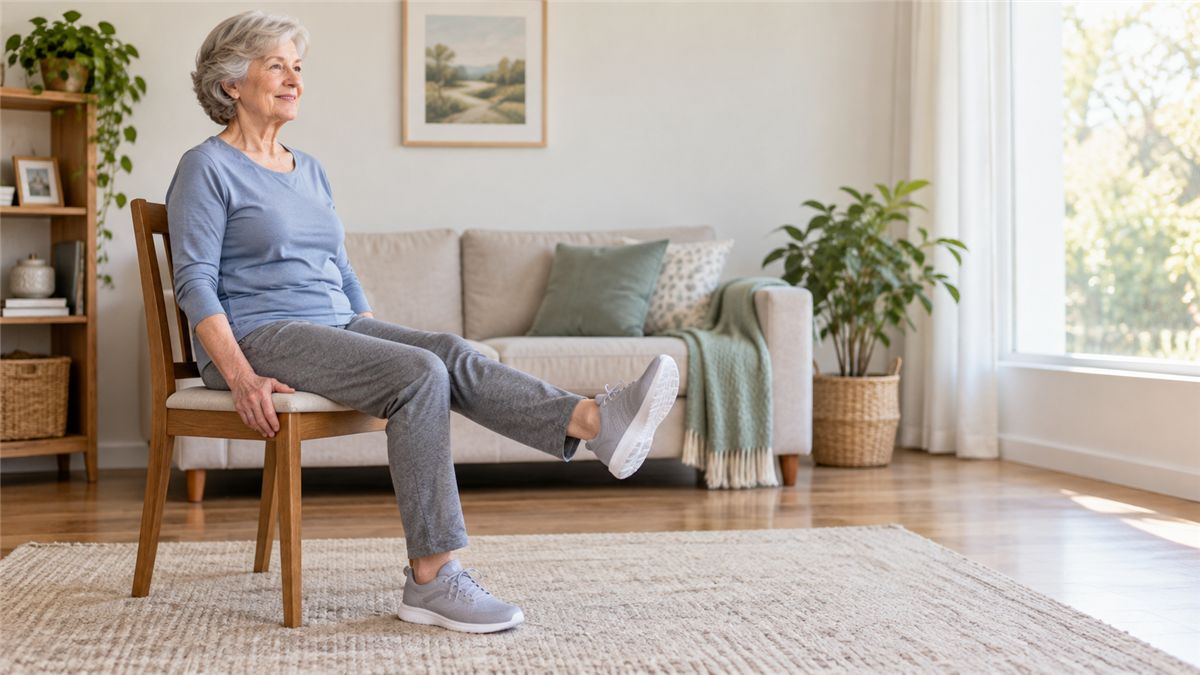
Joint-friendly exercises for seniors with arthritis can make everyday movement feel more manageable without turning exercise into a test of endurance. A few careful movements may help you feel more prepared for standing, walking, reaching and getting through the morning.
Arthritis symptoms vary. A knee, hip, hand or shoulder may feel different from one day to the next, and an exercise that feels comfortable for one person may not suit another. The aim of this guide is not to diagnose or treat arthritis, but to offer a calm starting point for gentle movement at home.
The Centers for Disease Control and Prevention says physical activity can help people with arthritis reduce joint pain and improve function and mood. It also recommends that older adults include a mix of aerobic, muscle-strengthening and balance activities, building up gradually. If you have not exercised for some time, have a significant flare, or have a medical condition that affects movement, check with your GP or physiotherapist first.
Why joint-friendly exercises for seniors with arthritis can help
When a joint feels stiff or sore, it is natural to move less. Unfortunately, long periods of inactivity can leave the surrounding muscles less prepared for ordinary tasks. Gentle exercise gives those muscles a chance to work while allowing you to control the range, speed and amount of support.
Joint-friendly movement usually has four features:
- Comfortable range: You move only as far as feels manageable, without forcing a stretch.
- Slow pace: You have time to place your feet, breathe normally and notice how your body responds.
- Useful support: A firm chair, wall or bench can make standing work safer and less demanding.
- Easy adjustment: You can reduce repetitions or choose a seated version on a more difficult day.
There is no need to prove that you can complete a difficult routine. A smaller movement done with control is often a better choice than a larger movement that causes you to grip, hold your breath or compensate with another part of your body.
A gentle 10-minute routine at home
Use a firm, non-rolling chair on a clear floor. For standing exercises, place the chair against a wall or use a stable bench. Keep water nearby, wear secure footwear and stop if you feel dizzy, faint, unusually breathless or unwell.
1. Seated posture reset
Sit with both feet flat and your hands resting comfortably on your thighs. Let the shoulders soften and imagine the crown of your head lifting gently upwards. Hold for 20 to 30 seconds while breathing normally.
2. Seated heel lifts
Keep your toes on the floor and lift both heels slowly. Pause briefly, then lower them with control. Complete five to ten repetitions. This small movement works the lower legs without asking you to balance while standing.
3. Seated toe lifts
Keep your heels down and lift the fronts of your feet. Lower slowly and repeat five to ten times. If your ankles or toes feel stiff, make the movement smaller rather than pushing into discomfort.
4. Seated knee extensions
Sit tall and straighten one knee until the lower leg lifts to a comfortable height. Pause for a moment, then lower slowly. Repeat five times on each side, keeping the movement smooth and avoiding a forceful lock at the knee.
5. Seated marching
Lift one foot a few centimetres, lower it, then lift the other. Continue for ten slow alternating steps. If your hips are uncomfortable, slide one foot forwards and back instead of lifting the knee.
6. Gentle hand movements
Rest your forearms on your thighs or a table. Open and close your hands without squeezing hard, then make small wrist circles in both directions. Complete five repetitions, and leave this exercise out if the hands are swollen or very painful.
7. Supported heel raises
Stand behind the chair and hold it lightly with both hands. Rise onto your toes, pause briefly and lower slowly. Begin with five repetitions. Use more support or return to seated heel lifts if you feel unsteady.
8. Supported side steps
Stay behind the chair and take one small step to the right, bringing the other foot in afterwards. Repeat to the left for two or three rounds. Keep the toes facing forwards and take smaller steps if the hips or knees feel irritated.
How to adjust the routine on a difficult day
Arthritis does not behave exactly the same way every day. A useful plan has more than one setting, so you can stay connected with movement without forcing a painful joint.
- On a comfortable day: Complete the full routine and add one or two repetitions only if your form remains controlled.
- On a stiff day: Stay seated for longer, shorten the range and take extra rests between exercises.
- On a painful or unusually swollen day: Avoid pushing through symptoms. Gentle position changes may be enough, and you may need advice from your GP or physiotherapist.
Guidance from the NHS and NICE supports regular, tailored exercise for osteoarthritis while recognising that pain can increase when a person first begins therapeutic exercise. That is one reason to build gradually and to distinguish mild effort from sharp or escalating joint pain.
You can also divide movement into short sessions. Five minutes in the morning and another five minutes later may feel more achievable than one longer workout. Over time, you can add gentle walking, water exercise, mobility work or balance practice if those options suit your ability.
Safety, pacing and when to ask for help
Keep the exercise space free from loose rugs, cords, pets and low furniture. Do not use a lightweight chair that slides when you hold it. If standing causes dizziness, practise seated movements and discuss the symptom with a health professional.
Stop and sit safely if you develop sharp or increasing pain, faintness, chest discomfort, unusual shortness of breath, sudden weakness, new loss of coordination or a joint that gives way. If you have recently fallen, had surgery, developed a sudden change in walking, or are finding weight-bearing difficult, ask your GP or physiotherapist for individual guidance before progressing.
The goal is not to eliminate every symptom or promise a particular result. It is to find a level of movement that you can repeat with confidence and adjust when your body needs a gentler approach.
Sources: This article is informed by physical activity and arthritis guidance from the US Centers for Disease Control and Prevention, NHS osteoarthritis treatment guidance, and NICE recommendations on tailored therapeutic exercise.
Frequently asked questions
1. Can exercise make arthritis worse?
Exercise can cause temporary discomfort when you begin, but it should not be sharp, severe or progressively worse. Start with small movements, reduce the range when needed and ask a health professional for advice if symptoms do not settle.
2. What are the best joint-friendly exercises for seniors with arthritis?
There is no single best routine for everyone. Seated heel lifts, knee extensions, gentle marching, supported heel raises, short walks and water-based exercise may all be useful when they are comfortable and appropriate for the person.
3. Should I exercise during an arthritis flare?
You may need to reduce the intensity, shorten the session or choose comfortable seated movements during a flare. If pain, swelling or fatigue is severe, unusual or worsening, rest and seek individual medical advice.
4. How often should I do these exercises?
Begin with short sessions that allow you to recover and repeat them consistently. The right frequency depends on your symptoms, health, fitness and professional advice, so gradual progress is more important than a fixed target.
5. Are seated exercises worthwhile if I cannot stand comfortably?
Yes. Seated posture work, heel lifts, toe lifts, knee extensions and marching can help you practise strength and coordination without prolonged standing. They can be a sensible starting point while you arrange further guidance.
6. How can I make knee exercises gentler?
Use a smaller range, move more slowly and avoid locking the knee at the end of the movement. You can also begin with seated knee extensions before trying supported standing work.
7. When should I speak with a GP or physiotherapist?
Ask for help after a fall or surgery, when you have a new or worsening change in walking, or when weight-bearing is difficult. Professional guidance is also sensible when pain, swelling, dizziness or fatigue makes exercise uncertain.
8. What is the next step after a 10-minute routine?
Notice how your body feels later that day and the following morning. If the routine feels manageable, repeat it on another day and add only a small amount of walking, mobility or strength work when that remains comfortable.
Next step: Choose one seated exercise today, move slowly, and keep the range comfortable. Consistency matters more than intensity.