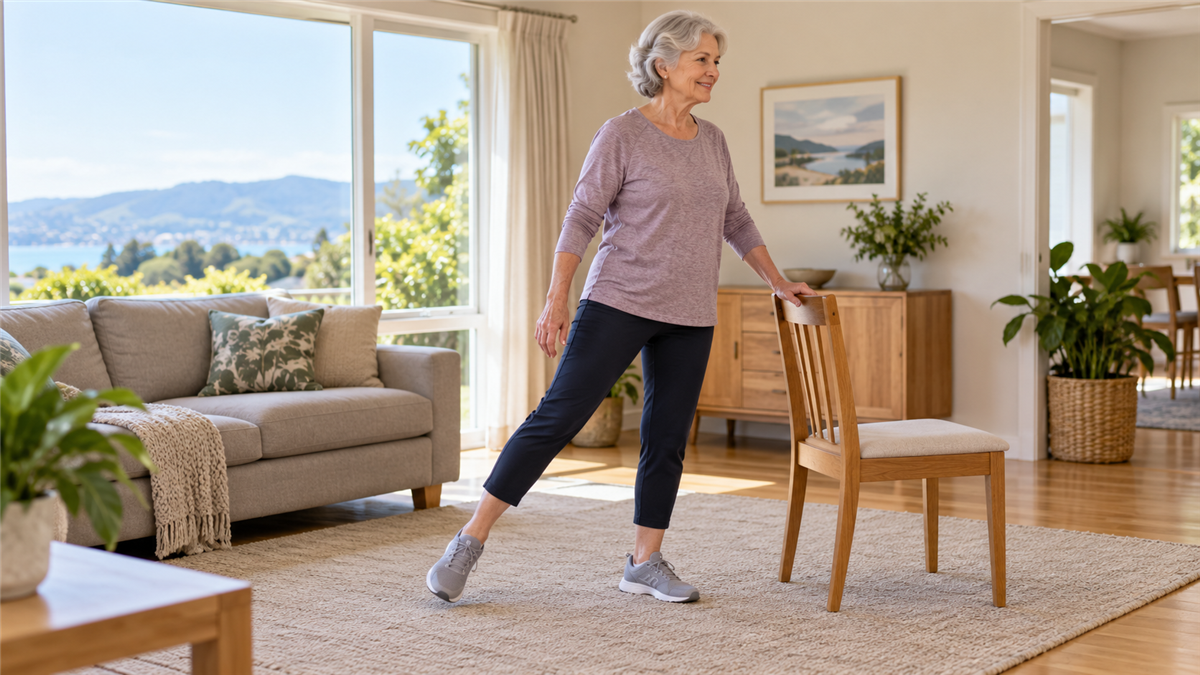
Gentle exercises for seniors can be a practical way to keep moving when you want to feel steadier at home. The aim is not to work through pain or prove anything. It is to practise comfortable movements with a clear space, a stable support nearby and enough time to stay in control.
For adults over 60, small amounts of regular movement can include everyday tasks as well as planned exercise. New Zealand guidance recommends starting slowly, building up gradually, and including balance, flexibility and muscle-strengthening activity through the week. If you have recently fallen, have chest pain, dizziness, new shortness of breath, a new injury, or a health condition that changes how safely you move, talk with your GP or physiotherapist before starting or increasing exercise.
Prepare for gentle exercise at home
Choose a well-lit area with a clear floor. Wear shoes that do not slip and place a firm, non-rolling chair where you can hold it lightly if needed. Keep your breathing easy, move slowly and stop if you feel sharp pain, chest discomfort, dizziness, sudden weakness or unwell.
Try one movement at a time, perhaps five slow repetitions or a few supported steps. Rest whenever you need to. It is sensible to begin below your limit and finish feeling as though you could have done a little more.
A supported gentle exercise routine
1. Seated ankle movements
Sit tall on a firm chair with both feet on the floor. Lift the toes of both feet, lower them, then lift the heels and lower them. Move within a comfortable range. This is a gentle way to wake up the ankles before standing practice.
2. Sit-to-stand with support
Sit near the front of a firm chair with feet flat and about hip-width apart. Lean forwards a little, press through your feet and stand up smoothly. Pause, then lower yourself slowly. Use the armrests or your hands if you need them. Practise only as many repetitions as you can do with good control.
3. Supported weight shifts
Stand behind a sturdy chair and hold the back lightly. With both feet planted, slowly shift a little weight towards one foot, then return to the middle. Repeat to the other side. Keep the movement small and do not lean away from the chair. This is a simple way to notice how your weight moves from one side to the other.
4. Supported side steps
Stand beside a bench or firm chair. Hold on lightly, take one small step sideways and bring the other foot in without crossing your feet. Take three to five steps, pause, then return in the other direction. Keep the toes pointing forwards and move at a pace that feels steady.
5. Heel raises at the chair
Stand behind the chair with both hands resting lightly on it. Lift both heels slowly, pause, then lower them with control. Keep your knees soft and your weight even through both feet. If you feel unsteady, make the lift smaller or sit down and rest.
6. Gentle shoulder and upper-back movement
While seated or standing with support nearby, let your arms rest by your sides. Slowly roll the shoulders up, back and down. Then reach both hands forwards only as far as is comfortable, and bring them back. Keep the neck relaxed and avoid forcing the movement.
Build the routine gradually
You do not need to do every movement at once. Choose two or three exercises that feel manageable, then add another only when you can move with control. Balance and strength work can be spread across the week rather than fitted into one long session. On days when standing does not feel right, the site’s 10-minute chair routine for stiff mornings gives a seated alternative.
Gentle mobility can make a useful companion to this routine; see the morning mobility routine for stiff joints for comfortable range-of-motion ideas. For more chair-supported balance practice, visit chair-based balance exercises for seniors. When you would like to add strength for everyday tasks, try the everyday strength exercises; the site’s Tai Chi introduction is another slow, separate movement option.
When to get individual advice
A physiotherapist, suitable exercise professional or your GP can tailor movement for arthritis, osteoporosis, neurological symptoms, pain that limits daily life, a recent operation or a history of falls. Personal advice is especially useful if one side feels much weaker than the other, if you are unsure how much support to use, or if balance has changed suddenly.
Sources: This article is informed by the New Zealand Ministry of Health physical activity guidelines for older people, which recommend gradual progression plus regular balance, flexibility and strength activity, and Healthify’s guidance on staying active over 65. The exercise suggestions here are editorial examples, not a substitute for individual clinical advice.
Frequently asked questions
1. What are gentle exercises for seniors?
They are comfortable, controlled movements that can support everyday mobility, strength and balance. A chair or bench can provide light support while you practise.
2. How often should I do gentle exercise?
Start with short sessions that suit you. New Zealand guidance includes balance and flexibility activity three times a week and muscle-strengthening activity twice a week, built up gradually.
3. Do I need equipment?
No special equipment is needed for this routine. A firm, non-rolling chair in a clear space can provide useful support.
4. Can I do these exercises if I feel unsteady?
Use firm support and choose the seated movements first. If you have fallen recently or are worried about your balance, ask a health professional for individual guidance before progressing.
5. How many repetitions should I start with?
Five slow repetitions, or a few supported steps, can be enough to begin. Stop before your form becomes unsteady and add more only when the movement feels controlled.
6. Should gentle exercise hurt?
It should not cause sharp pain, chest discomfort, dizziness, sudden weakness or feeling unwell. Stop and seek appropriate advice if any of these occur.
7. Can I use a chair for balance practice?
Yes. Use a firm chair that will not roll, placed on a clear floor. Hold it lightly for support rather than pulling hard on it.
8. When should I talk with my GP or physiotherapist?
Ask for advice before starting or increasing exercise if you have new symptoms, a recent injury or operation, a history of falls, or a condition that affects safe movement.