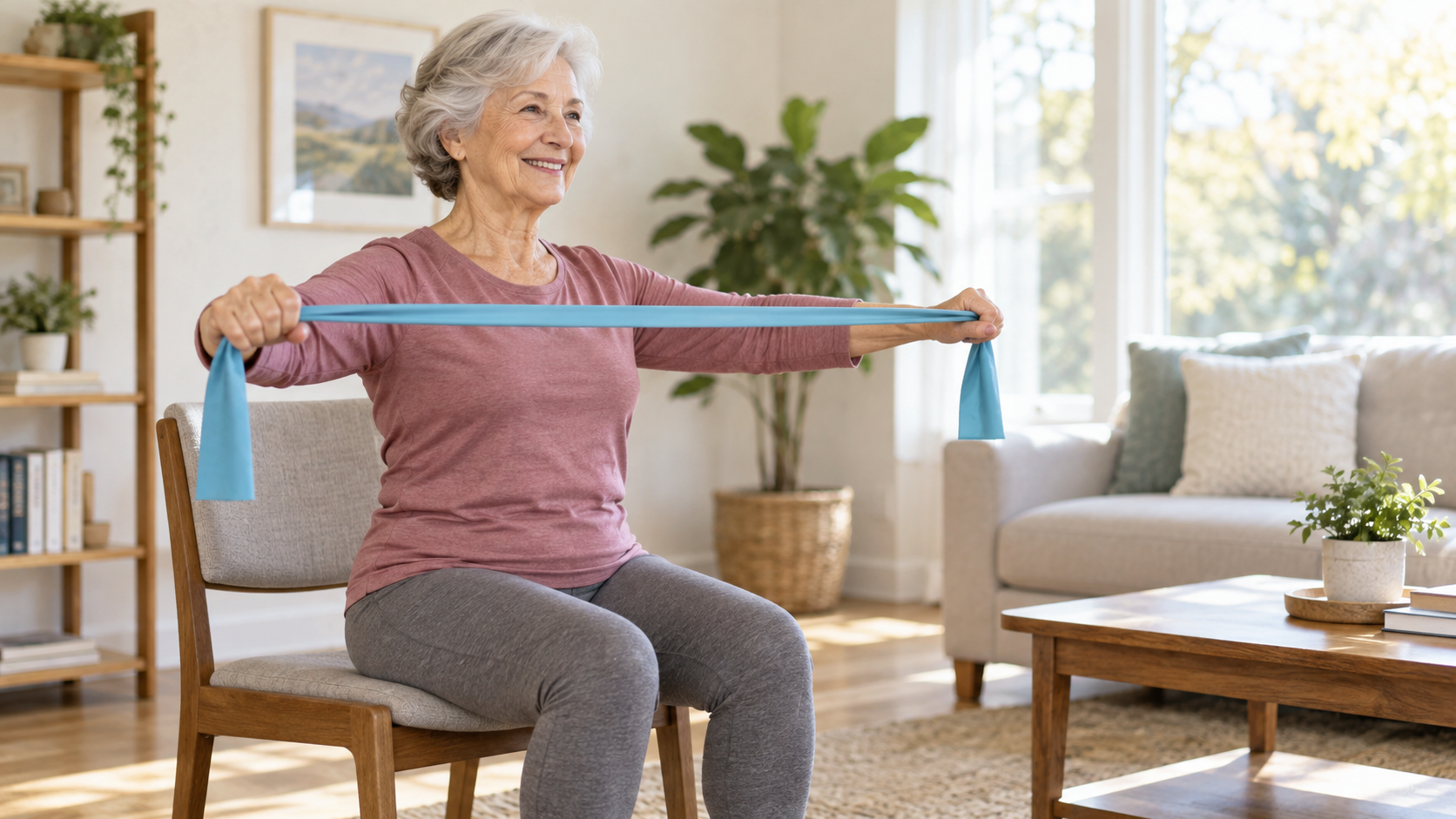
Gentle yoga for arthritis can be adapted to a chair, a wall and the amount of movement that feels comfortable today. The aim is not to copy a difficult pose. It is to combine calm breathing, small joint movements and supported strength in a way that respects sore or stiff areas.
Use a firm chair on a clear floor. Move slowly and stop for sharp pain, dizziness, chest discomfort, unusual breathlessness or a sudden change in strength. If you have recently had surgery, a fall or a significant flare, ask your GP or physiotherapist for personal guidance before starting.
What makes this practice joint-friendly?
A joint-friendly practice uses a comfortable range, steady breathing and plenty of support. You can keep both feet on the floor, work from a seated position and leave out any movement that increases symptoms. The CDC says physical activity can help people with arthritis manage pain and function, while NHS guidance recommends regular, tailored exercise for osteoarthritis.
A short chair-based practice
1. Arrive and breathe
Sit with both feet supported and rest your hands on your thighs. Take four easy breaths. Let the shoulders drop without forcing the chest up.
2. Shoulder blade glide
Gently draw the shoulders back and down, then release. Repeat five times. Keep the neck relaxed and make the movement smaller if the shoulders are sore.
3. Seated side reach
Place one hand beside you on the chair and reach the other arm slightly upwards and across. Return to centre and change sides. Keep both sitting bones supported and do not lean far.
4. Wrist and finger waves
Open the hands softly, relax them and circle the wrists a few times each way. If the fingers are swollen, keep the range tiny and avoid squeezing.
5. Seated cat-cow movement
Place your hands on your thighs. On an easy breath in, lengthen the spine gently. On the breath out, allow the upper back to round a little. Move only within a comfortable range and do not collapse the chest.
6. Ankle and knee flow
Lift one heel, then the other, followed by a small knee extension on each side. Complete five slow rounds. Keep the movement smooth and stop if a joint catches or becomes more painful.
7. Supported standing option
If you feel steady, stand behind the chair with both hands resting on it. Shift weight a small amount from side to side, keeping both feet grounded. Sit down before you feel tired.
How to practise with changing symptoms
On a comfortable day, you may complete the full sequence once or twice. On a stiff day, stay seated and shorten the range. On a painful or swollen day, a few breaths and gentle position changes may be enough. A useful practice has more than one setting.
Notice how you feel later that day and the next morning. Mild effort is different from pain that escalates or limits ordinary movement. If a particular exercise repeatedly causes trouble, remove it and ask for a suitable alternative.
Use yoga as one part of movement care
Chair yoga can support mobility and confidence, but it does not replace diagnosis or treatment. Comfortable walking, strength work, sleep, suitable footwear and advice about medicines may also matter. Choose the combination that fits your health and daily life.
Sources: This article is informed by CDC physical activity and arthritis guidance and NHS osteoarthritis treatment guidance.
Frequently asked questions
1. Is chair yoga suitable for arthritis?
It can be a gentle option when the chair is stable and the movements are adapted to your comfort. Ask for individual advice when symptoms or balance are uncertain.
2. Do I need to be flexible to begin?
No. Begin with small movements and comfortable breathing. Flexibility is not a requirement for a useful starting practice.
3. Should yoga for arthritis hurt?
Sharp, worsening or unfamiliar pain is not a goal. Reduce the range or stop and seek advice if symptoms do not settle.
4. Can I do chair yoga during a flare?
You may need to shorten the practice or choose breathing and comfortable position changes only. Severe or unusual swelling and pain deserve medical advice.
5. What kind of chair is safest?
Choose a firm, non-rolling chair without wheels. Keep it on a clear, level surface and avoid pulling hard on it while standing.
6. How often should I practise?
Short, repeatable sessions are a sensible start. Let your symptoms and recovery guide the frequency rather than forcing a daily target.
7. Can chair yoga improve balance?
Seated work can practise posture and coordination. Standing balance should be added only with suitable support and, when needed, professional guidance.
8. What is the simplest first step?
Sit with both feet supported, take four calm breaths and complete five gentle shoulder blade glides.
Next step: Keep the practice easy enough that you finish feeling more settled and confident, not tested.