
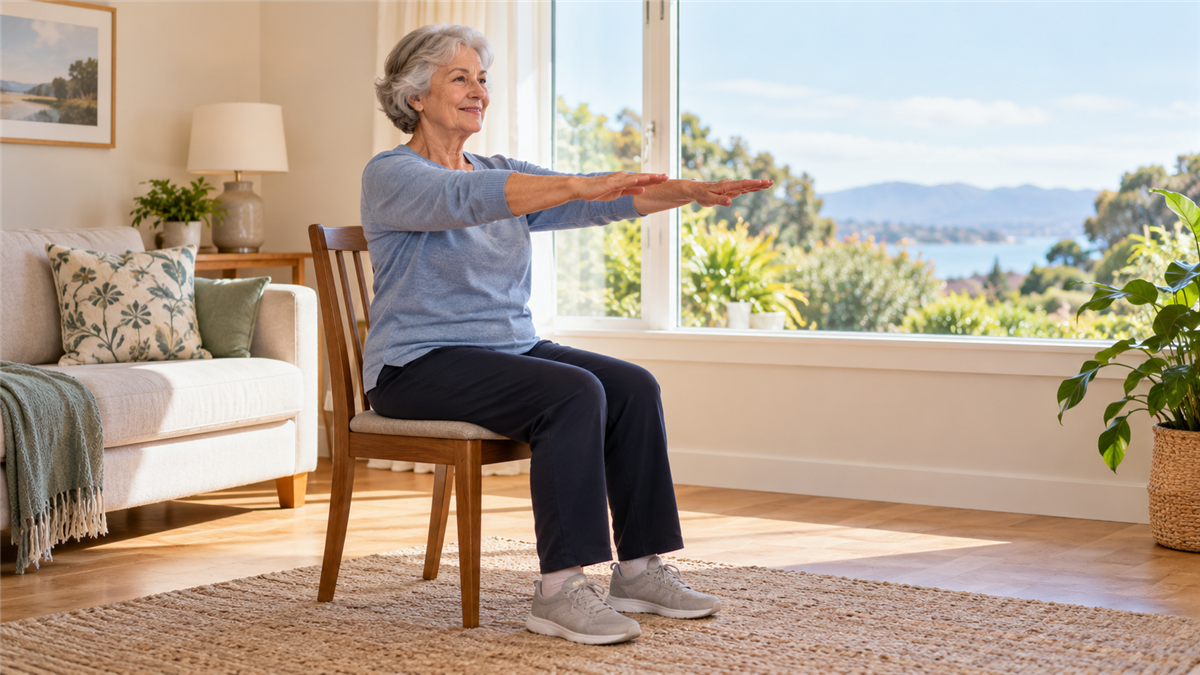
Chair exercises for seniors can offer a comfortable way to begin a stiff morning without rushing into standing work. This 10-minute routine is designed for adults over 60 who want to practise easy range-of-motion movements from a firm chair. The goal is simply to feel more ready for the next part of your day—not to stretch as far as possible.
Set the chair on a clear, non-slip floor and sit with both feet supported. Keep your breathing easy and move only in a range that feels comfortable. Stop if you have sharp pain, chest discomfort, dizziness, sudden weakness or feel unwell. If you have recently fallen, have new symptoms, or are unsure what movement is safe for you, check with your GP or physiotherapist before starting or increasing exercise.
Set up for a safe chair routine
Choose a firm chair that does not roll or slide. Sit tall but not rigid, with your feet about hip-width apart. Have a glass of water nearby if helpful, and allow extra time: it is fine to pause between movements. New Zealand guidance for older people recommends starting slowly and building up gradually, including regular flexibility, balance and strength activity through the week.
Print-friendly 10-minute chair routine
Use this as a simple checklist. Try each step slowly for about a minute, or less if that is what feels right. You can stop after any step and return another day.
- Settle and breathe: Place both feet on the floor. Take three relaxed breaths and let your shoulders soften.
- Foot and ankle movements: Lift your toes, lower them, then lift your heels and lower them. Keep the movement small and controlled.
- Marching feet: Lift one foot a little, lower it, then change sides. Keep your body upright and do not lean back.
- Knee straightens: Slowly straighten one knee until the leg is comfortable, then bend it again. Alternate sides without locking the knee.
- Arm reaches: Reach both hands forwards at a comfortable height, then bring them back. Keep the neck and jaw relaxed.
- Shoulder rolls: Roll the shoulders gently up, back and down. Avoid forcing the range.
- Side reaches: Rest one hand on the chair. Slide the other hand down the outside of the thigh, then return to the middle. Change sides.
- Gentle turns: With your hips facing forwards, turn your chest and head a small amount to one side, return to centre, then change sides.
- Heel-to-toe awareness: With both feet still on the floor, gently rock from heels towards toes without lifting both feet. Keep the movement light.
- Finish slowly: Sit quietly for a few breaths. Notice how you feel before standing, and use the chair arms or another stable support if you need it.
This is an editorial routine, not a personalised exercise plan. Choose fewer steps when energy is low, and keep the movements comfortable rather than trying to complete every item.
How to use the routine through the week
A short chair routine can be a movement break after breakfast or before heading out, but it does not need to be done all at once. The Ministry of Health’s guidance for older people includes balance and flexibility activity on three days each week and muscle-strengthening activity on two days each week. Chair-based movement can be one gentle starting point; build gradually according to your health and confidence.
When standing feels appropriate, the site’s gentle exercises for steadier movement includes a supported weight-shift idea. For a more focused seated option, see chair-based balance exercises for seniors. The morning mobility routine for stiff joints offers further gentle range-of-motion ideas, while everyday strength moves can be explored later for standing, carrying and reaching tasks. If you enjoy slow, flowing movement, this site’s beginner Tai Chi balance routine is a separate option to consider.
When individual advice is useful
Ask for individual advice if pain is worsening, stiffness follows a recent injury or operation, one side feels noticeably weaker, or balance has changed suddenly. ACC notes that strength and balance activities can help older adults stay active and independent for longer, and community options can include chair-based exercise and Tai Chi. A physiotherapist, suitable exercise professional or your GP can help you choose a safer starting point.
Sources: This article is informed by the New Zealand Ministry of Health physical activity guidelines for older people and ACC’s strength and balance information for older adults. The practical steps above are editorial suggestions and do not replace individual clinical advice.
Frequently asked questions
1. Are chair exercises good for stiff mornings?
They can be a gentle way to begin moving after sitting or sleeping. Keep the range comfortable and allow time to settle before standing.
2. Do I need special equipment?
No. Use a firm, non-rolling chair on a clear floor. Comfortable clothing and shoes that do not slip can help when you stand afterwards.
3. How long should I do this routine?
The checklist is designed for about 10 minutes, but a shorter session is fine. Start slowly and build up only when the movements feel controlled.
4. Should chair exercises hurt?
No. Stop for sharp pain, chest discomfort, dizziness, sudden weakness or feeling unwell, and seek appropriate advice if symptoms persist.
5. Can I do the routine every day?
Gentle movement can be spread through the week. New Zealand guidance recommends gradual progression and regular flexibility, balance and strength activity rather than doing too much at once.
6. Can chair exercises improve my balance?
Seated work can help you practise controlled movement and prepare for supported standing activity. For balance practice, use stable support and choose exercises that suit your confidence.
7. What if I need help to stand from the chair?
Use the chair arms or another stable support and take your time. A physiotherapist or GP can advise if standing has become newly difficult or unsafe.
8. When should I speak with a health professional?
Talk with your GP or physiotherapist before starting or increasing exercise if you have recently fallen, have a new injury, new symptoms or a condition that affects safe movement.